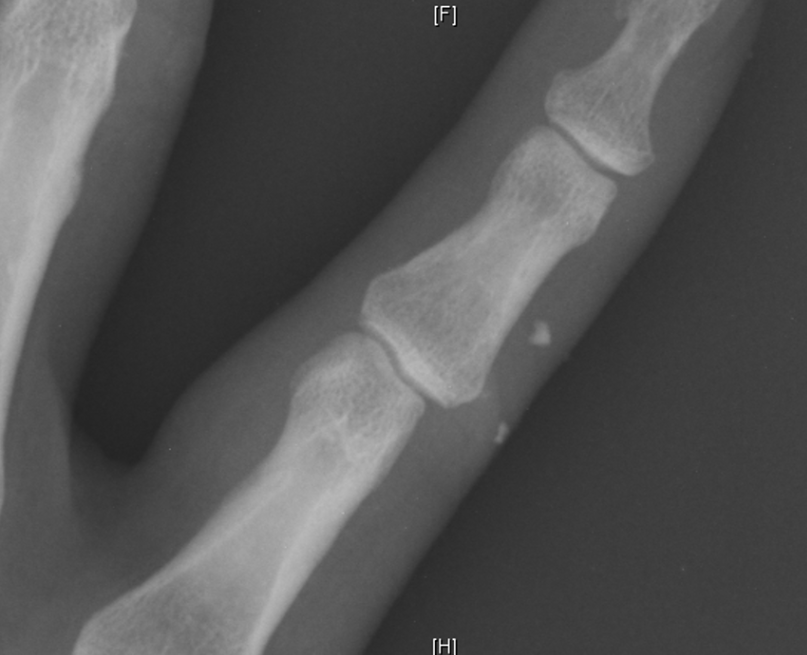
Soft Tissue Case 3 History/Physical Exam
Wound Foreign Body
History and Physical Exam
Certain scenarios in particular should raise suspicion for WFBs. To name a few:
- Stepping on glass
- Punching through a window
- Motor vehicle collision wounds
- Wounds on the sole of the foot
- Objects that fragment while in one's hand
- Perioral wounds with broken teeth
- Falling in gravel or soil
- Scalp wound from glass
- Punctures
Patients are often not aware of the presence of a WFB. Most WFBs present in the first day or so from injury but delayed presentations also occur. Patients may report a FB sensation but the absence of this symptom is not reliable for ruling out a FB. Less common presentations include a localized mass, persistent wound pain, recurrent infection, impaired function, inflammatory arthritis, neurovascular injury, and particle embolization.Wounds should be palpated for FBs, but any probing should occur with a metal instrument rather than a gloved finger. A grating sensation against the probe suggests a retained FB. The most important part of the examination is wound exploration, which should be performed in a bloodless field with adequate lighting and local anesthesia when appropriate.